
What Creates Great Sound in a Podcast Recording Studio?
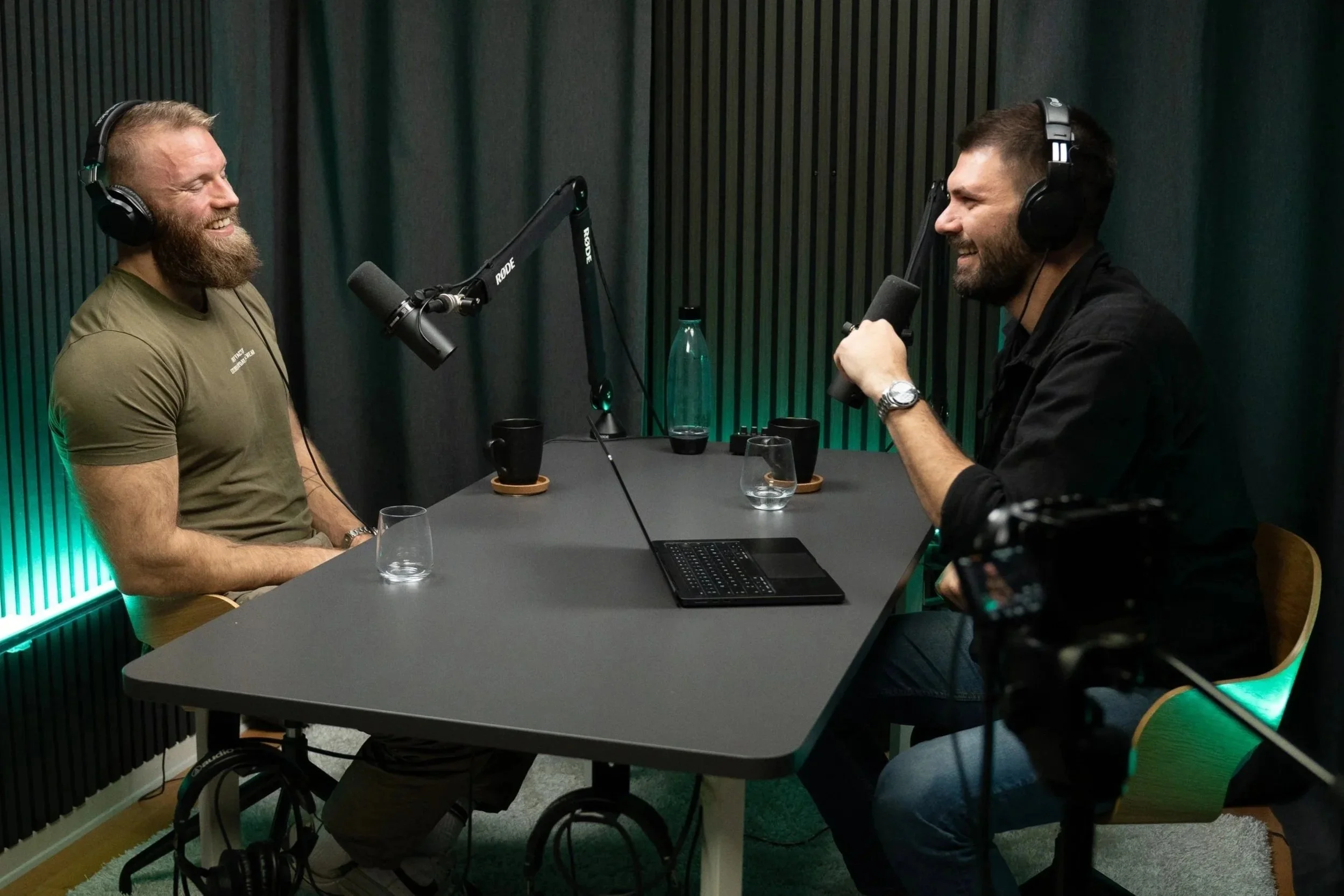
Podcast recording studio designed for clear and professional audio.
What Creates Great Sound in a Podcast Recording Studio?
When people think about starting a podcast, the first thing that often comes to mind is the microphone. Many assume that buying an expensive microphone is the key to achieving professional sound.
In reality, great audio in a podcast comes from a combination of factors. A professional podcast recording studio is designed to control how sound behaves in the room, how voices are captured and how the entire recording chain works together.
From our experience working with podcast production, good sound is rarely about a single piece of equipment. It is about creating the right environment where everything works together.
The room is more important than most people think
One of the most important elements in a podcast recording studio is the room itself. Sound behaves differently depending on the size of the space, the surfaces and how the room is treated acoustically.
Hard surfaces like walls, glass and wooden floors reflect sound. When sound bounces around the room, it creates echo and reverb, which can make voices sound distant or unclear.
This is why many professional podcast recording studios use acoustic treatment such as panels, soft materials and other sound absorbing elements. These help control reflections and create a much clearer recording environment.
In many cases, the acoustics of the room make a bigger difference than the microphone itself.
Microphones designed for voice
Microphones are still an important part of the equation. In podcasting, microphones designed specifically for speech are often preferred because they focus on the voice while reducing unwanted background noise.
Dynamic microphones are commonly used in podcast recording studios because they capture voices clearly while being less sensitive to sounds coming from the room.
The goal is not necessarily to capture every sound in the room, but to capture the voice in a way that feels natural and present.
When microphones are placed correctly and used in the right environment, the result is a clear and focused conversation.
Distance and placement matter
Another factor that influences sound quality is how microphones are positioned relative to the speaker.
When a microphone is placed too far away, it captures more of the room and less of the voice. When it is placed closer, the voice becomes more present and controlled.
Small adjustments in distance and angle can significantly improve the clarity of a recording. This is something many podcasters gradually learn through experience.
A well-designed podcast recording studio makes it easier to maintain consistent microphone placement across different episodes.
Monitoring and audio control
Good sound also comes from monitoring and controlling audio levels during the recording. In professional setups, audio levels are monitored to ensure that voices are captured clearly without distortion.
If the levels are too low, the recording may sound weak or noisy. If they are too high, the audio may clip and become distorted.
A balanced recording level helps preserve the natural dynamics of a conversation while maintaining clarity.
This part of the process often happens quietly in the background, but it plays a significant role in the final sound quality.
Consistency across episodes
One of the advantages of recording in a podcast recording studio is consistency. When the environment, equipment and setup remain stable, every episode maintains a similar sound quality.
This consistency makes the podcast more enjoyable to listen to. The audience does not have to adjust to different sound levels or recording environments from one episode to another.
For many podcasters, maintaining this consistent quality is one of the main reasons to record in a dedicated studio environment.
Great sound supports great conversations
Ultimately, the purpose of good sound is to support the conversation. A podcast works best when listeners can focus on the ideas being shared rather than being distracted by technical issues.
Clear audio allows the personalities, stories and insights of the participants to come through naturally.
When the recording environment is well designed, technology fades into the background and the conversation becomes the center of attention.
Conclusion
Great audio in a podcast is rarely the result of a single piece of equipment. Instead, it comes from the interaction between the room, the microphones and the overall recording setup.
A professional podcast recording studio creates an environment where these elements work together to capture voices clearly and consistently.
When the technical side is handled well, podcasters can focus on what truly matters: meaningful conversations and engaging content.
