
How to Set Up a Professional Video Podcast
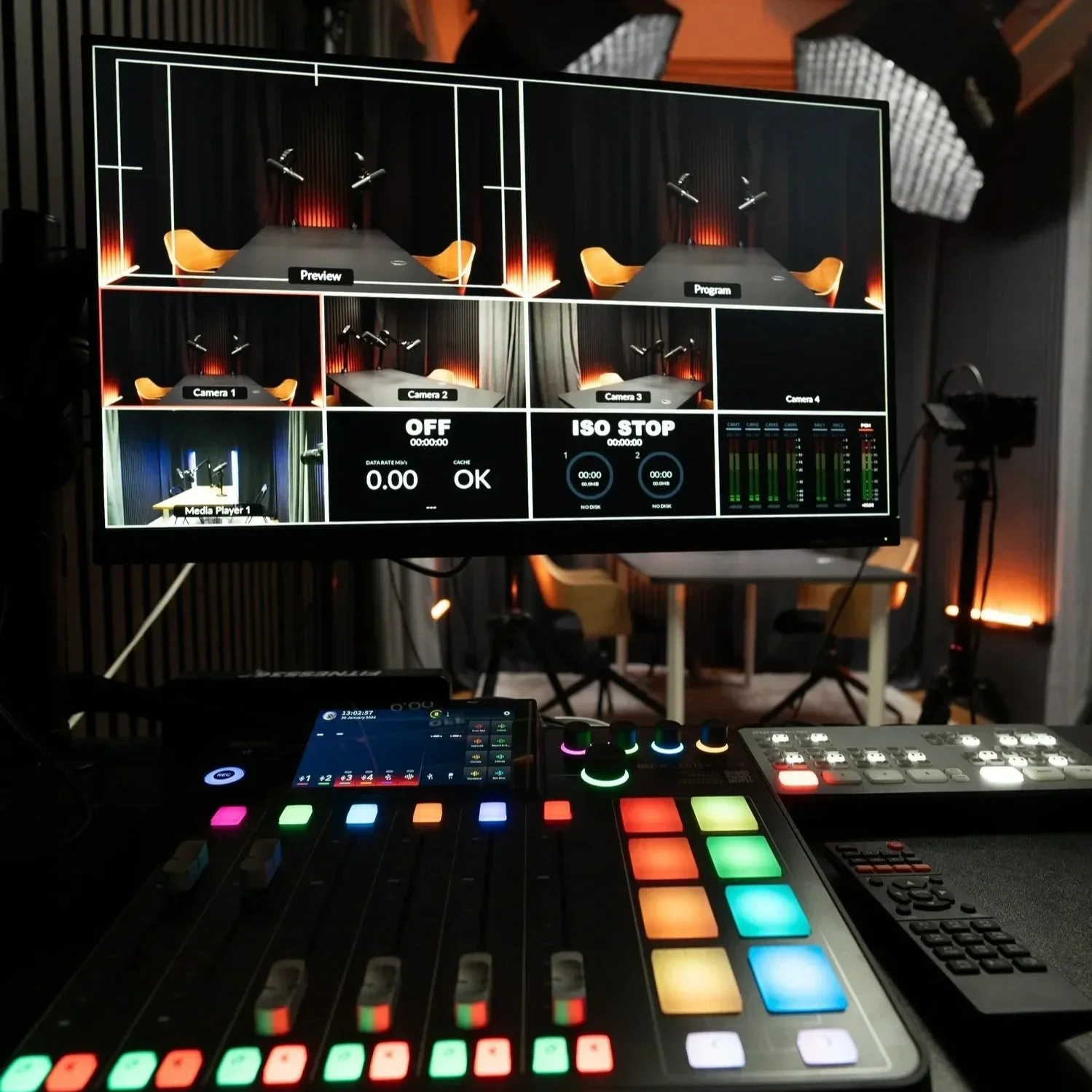
Video podcast setup used for professional podcast production.
How to Set Up a Professional Video Podcast
Video podcasts have become one of the most popular formats for creators, companies and experts who want to share conversations online. With platforms like YouTube becoming one of the largest podcast platforms in the world, many podcasts are now recorded with both audio and video.
But when people think about starting a video podcast, they often assume the setup has to be complicated or extremely expensive. In reality, there are many different ways to approach video podcast production. The most important thing is finding a setup that matches your level, your goals and the type of content you want to create.
From our experience working with podcast production, the best approach is usually to start simple and gradually improve the setup over time.
Start with the conversation, not the equipment
One of the biggest mistakes new podcasters make is focusing too much on equipment before they even know what their podcast will be about.
A video podcast works best when the conversation feels natural and authentic. Viewers are often more interested in the people and the discussion than the technical details of the setup.
Because of this, many successful podcasts start with relatively simple production setups and evolve as the show grows.
The equipment can always improve later. The most important part is finding a format and a conversation style that works for you.
Think about your environment
The environment where you record plays a bigger role than many people expect. Lighting, sound reflections and camera placement all influence how professional the final result looks.
Some creators build small setups at home, while others prefer recording in dedicated studios where the lighting, acoustics and equipment are already optimized.
There is no single correct solution here. The best environment is the one that allows you to record consistently and comfortably.
If recording becomes too complicated, it often slows down the entire content process.
Cameras and visual framing
A video podcast can be recorded with many different types of cameras. Some creators use professional cameras, while others start with simple mirrorless cameras or even high-quality webcams.
What usually matters more than the camera itself is how the shot is framed. Good framing makes the conversation feel more natural and engaging to watch.
Many video podcasts use two or three camera angles to capture different perspectives of the conversation. This helps keep the visual experience dynamic and makes the podcast easier to watch over longer periods of time.
But again, the level of complexity depends on the creator’s goals and experience.
Audio is still an important part
Even though video is becoming more important in podcasting, audio quality still plays a central role. A podcast can work with simple visuals, but poor audio can quickly make the experience difficult for viewers or listeners.
This is why many creators choose microphones designed specifically for voice recording. These microphones help create clear, focused sound that makes conversations easier to follow.
The key is not necessarily having the most expensive microphone, but using equipment that captures voices clearly and consistently.
Editing and workflow
Another important part of a video podcast setup is the workflow after recording. Editing, exporting and publishing episodes can take time, especially if the production setup is complex.
Some creators prefer editing every detail of their podcast, while others aim for a more efficient process where the episode is mostly ready immediately after recording.
Over time, most podcasters find a workflow that balances quality with efficiency.
Finding your own level
There is no universal formula for the perfect video podcast setup. Some podcasts operate with large production teams and advanced equipment, while others succeed with much simpler setups.
What matters most is finding a level that allows you to produce episodes consistently without turning the process into a technical challenge.
Podcasting works best when the focus stays on the conversation, the guests and the ideas being shared.
The production setup should support that process, not make it harder.
Conclusion
Setting up a professional video podcast does not mean building the most complex studio from day one. The most effective approach is often to start with a setup that matches your experience level and gradually improve it over time.
As your podcast grows, your production setup can grow with it. What matters most is creating an environment where conversations flow naturally and episodes can be produced consistently.
When the balance between content and production works well, video podcasts become one of the most powerful formats for sharing knowledge, stories and ideas.
